The Preparation That Makes Simultaneous Interpretation Work
- August 21, 2026
- Interpreting Services , simultaneous interpretation
A trade delegation once sat through ninety minutes of a technical presentation before anyone realised the interpreters had been given the agenda and nothing else. No slides, no speaker list, no product names. The interpreting was competent. The meeting still failed, because half the room heard a fluent approximation of terms that had precise, contractual meanings.
That gap is where most interpreted events go wrong. Simultaneous interpretation is often bought like catering, a line item confirmed a week out with a headcount and a language pair. The people who get real value from it treat it as a professional service that needs a briefing, in the same way you would brief a photographer or a lawyer.
What is actually happening in the booth
Simultaneous interpreting means listening and speaking at the same time, with a lag of a few seconds while the interpreter holds an unfinished sentence in memory, works out where the speaker is going, and delivers it in another language. The technical description of how the mode developed traces it back to the Nuremberg trials, where it replaced the slow, sequential method that had made international proceedings unbearable.
The cognitive load is the reason interpreters work in pairs and swap every twenty to thirty minutes. It is not a union rule invented to inflate invoices. Accuracy measurably drops after that point, and a client who insists on one interpreter for a full day is buying a good morning and a poor afternoon.
The brief matters more than the budget
Give the team the agenda, the slide deck, the speaker names with correct pronunciation, any acronyms your company uses internally, and last year's transcript if one exists. Send it days ahead, not the night before. Interpreters build a glossary from that material and rehearse the awkward parts, which is exactly the preparation that turns a hesitant rendering into a confident one.
Confidentiality is the usual objection. It is also the usual excuse. Professional interpreters work under strict confidentiality obligations, and any agency will sign a non disclosure agreement without blinking. Withholding the deck to protect a launch, then expecting a flawless live rendering of it, is a trade nobody should make.
Names, numbers and jokes
Ask any working interpreter what they dread and you will hear the same three answers. Proper nouns arrive with no context and no redundancy, so a mispronounced surname can vanish entirely. Numbers carry enormous weight in a single syllable, and a misheard figure in a procurement meeting is expensive. Humour is worst of all, because it depends on cultural reference and timing that rarely survives the crossing. A real estate contract is rarely as standard as the agent suggests.
Speakers can help. Read numbers slowly and repeat the important ones. Introduce people by name and role. If you must tell a joke, accept that it may be rendered as an explanation rather than a punchline, and do not look at the booth when nobody laughs.
The room, the kit and the sound
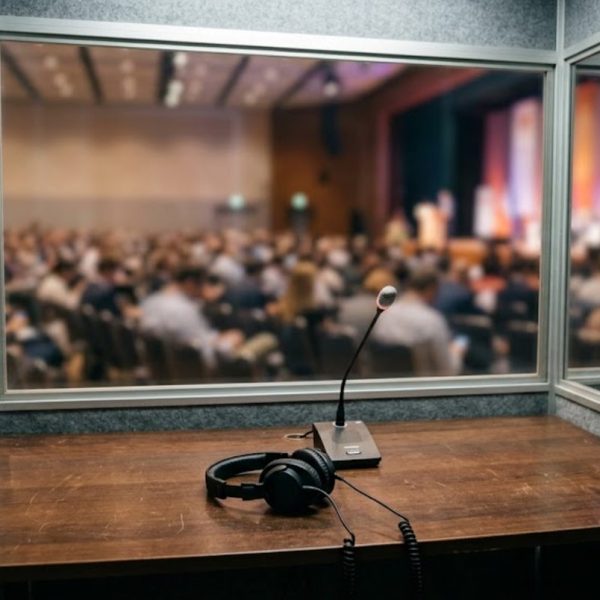
Interpreters need to see the speaker and the screen. A booth tucked behind a pillar with a view of the back of the room forces the team to work from audio alone, which removes the gestures and slides they use to anticipate meaning. Sound quality matters even more. A speaker who wanders away from a lectern microphone, or a remote participant on laptop audio in a noisy room, produces exactly the input that makes accurate work impossible.
Hybrid events add another layer. Remote platforms have improved, but they compress audio in ways that strip out the frequencies interpreters rely on, and they introduce latency that makes turn taking harder. If the meeting genuinely matters, invest in proper microphones for everyone who will speak. It costs less than the interpreting itself and protects the whole investment.
What to ask before you book
Start with experience in your subject, not just the language pair. A brilliant conference interpreter who has never worked a clinical trial review will struggle with the terminology, and the reverse is equally true. Ask how many interpreters will cover each language and how they plan to rotate. Ask who supplies and tests the equipment, and when they arrive on site.
It is also worth understanding what you are choosing between, because not every event needs a booth. A guide to the difference between simultaneous and consecutive interpretation is a sensible starting point, and providers vary more than their websites suggest, which is why comparing simultaneous interpretation services on process rather than price tends to be the better use of an afternoon. For genuinely high stakes work, the membership directory of the International Association of Conference Interpreters is a useful sanity check on credentials.
None of this is complicated. It is mostly the discipline of treating the people in the booth as participants in the meeting rather than infrastructure attached to it. Brief them properly and simultaneous interpretation becomes invisible, which is the only review that has ever mattered in this profession.